marketingwithshitik.com

Uncategorized

graphic design creator
Uncategorized

graphic design creator

graphic design creator Sure — here is the English version for your website marketingwithshitik.com: Graphic Designing: Build a Strong Brand with Creative Visuals In today’s digital world, the identity of a business is not only defined by its products or services. Its visual identity is equally important. A professional logo, attractive social media posts, creative banners, business cards, and modern website graphics can help a business create a strong and memorable identity. This is where Graphic Designing plays an important role. Graphic designing is the creative process of combining images, colors, typography, shapes, illustrations, and other visual elements to communicate a message effectively. A good design not only looks attractive but also helps businesses connect with their target audience. What is Graphic Designing? Graphic Designing is a form of visual communication used to present ideas, information, products, and brand messages in an attractive and understandable way. Today, graphic designing is used by almost every industry. From small businesses and startups to large companies and established brands, businesses use professional graphics to promote their products and services. A well-designed visual can communicate a message quickly, attract attention, and create a positive impression of a brand. Why is Graphic Designing Important for Business? 1. Creates a Strong Brand Identity A strong brand identity helps customers recognize your business easily. Your logo, colors, fonts, images, and overall design style work together to create your visual identity. Consistent branding across your website, social media, advertisements, and printed materials makes your business look professional and memorable. 2. Attracts Customer Attention The internet is highly competitive, and people see thousands of advertisements and posts every day. A creative and visually appealing design can immediately capture the attention of potential customers. An attractive graphic can encourage users to stop scrolling, read your message, and learn more about your business. 3. Builds a Professional Image Professional design can make your business look trustworthy, reliable, and established. Customers are more likely to take a business seriously when its branding and marketing materials look polished. Good graphic design creates a positive first impression and can help build customer confidence. 4. Supports Social Media Marketing Social media platforms depend heavily on visual content. Businesses use creative posts, advertisements, stories, reels covers, banners, and promotional graphics to communicate with their audience. Professional social media designs can help improve engagement, increase brand awareness, and make your content more recognizable. 5. Makes Communication Easier Sometimes a complex message can be communicated more effectively through an image than through a long paragraph. Graphic designers use layouts, icons, illustrations, colors, and typography to present information in a simple and engaging way. Popular Graphic Designing Services Logo Design A logo is one of the most important elements of a brand’s visual identity. A unique and professional logo helps customers recognize your business and differentiate it from competitors. A good logo should be simple, memorable, versatile, and relevant to the brand. Brand Identity Design Brand identity includes more than just a logo. It can include brand colors, typography, icons, business cards, letterheads, social media templates, and other visual elements. A consistent brand identity gives your business a professional and unified appearance. Social Media Design Businesses need attractive graphics to promote their products and services on social media. Social media design services can include Instagram posts, Facebook creatives, promotional advertisements, stories, banners, and other digital content. Banner and Poster Design Banners and posters are commonly used to promote products, offers, events, campaigns, and special announcements. Creative layouts, attractive typography, and strong visual elements can make promotional banners more effective. Brochure and Flyer Design Brochures and flyers are useful marketing materials for presenting business information, products, services, offers, and contact details. A professional brochure can help businesses communicate important information in an organized and attractive format. Website Graphic Design Your website is often the first place where potential customers interact with your business. Creative hero banners, icons, illustrations, promotional graphics, and other website visuals can make your website more attractive and engaging while supporting your brand identity. Packaging Design Packaging is another important part of graphic designing. Attractive packaging can help products stand out from competitors and create a strong impression on customers. Good packaging design combines creativity, branding, information, and usability. Elements of Effective Graphic Design Creating an attractive design is not only about using beautiful colors and images. A successful design should have a clear purpose and communicate the intended message effectively. Simplicity A clean and simple design is usually easier for people to understand. Avoiding unnecessary elements can help keep the viewer focused on the main message. Color Colors influence how people perceive a brand. Choosing the right color combination can communicate the personality and mood of a business. Typography Fonts should be attractive but, more importantly, easy to read. Different font styles can also help establish a brand’s personality. Visual Hierarchy Visual hierarchy determines which information the viewer notices first. Important headlines, offers, buttons, and messages should be clearly highlighted. Consistency Using consistent colors, fonts, layouts, and design elements across different marketing channels helps create a recognizable brand. High-Quality Graphics High-resolution images and professional graphics provide a better visual experience and help maintain a polished brand appearance. Graphic Designing and Digital Marketing Graphic designing and digital marketing are closely connected. A successful digital marketing campaign often requires high-quality creative visuals. Businesses use graphic design for social media marketing, online advertising, websites, email campaigns, Google Ads creatives, promotional banners, presentations, and other digital marketing activities. A strong marketing strategy combined with professional graphic design can help improve brand awareness, attract potential customers, and increase engagement. Modern Graphic Designing Tools Professional graphic designers use different tools depending on the type of project. Design software can be used for image editing, vector graphics, illustrations, layouts, presentations, social media creatives, and website graphics. Modern design tools allow designers to create professional visuals for both digital and print platforms. However, tools alone do not create great designs. Creativity, experience, understanding of branding, and knowledge of the target audience are equally
graphic design creator
Uncategorized

Video Editing – Professional Video Editing

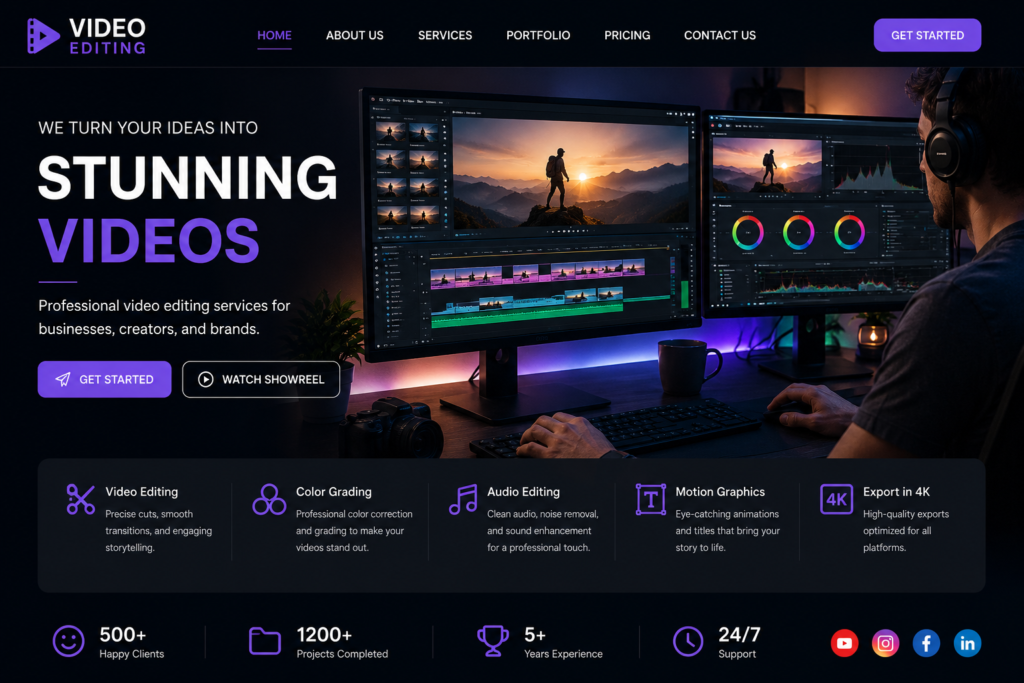
Video Editing – Professional Video Editing Services Video editing is the process of transforming raw video footage into an attractive, professional, and engaging final video. It involves selecting the best clips, cutting unnecessary parts, adding transitions, music, text, graphics, effects, and color adjustments to create a video that effectively communicates a message. In today’s digital world, video content has become one of the most powerful ways to connect with an audience. Businesses, brands, influencers, and creators use professionally edited videos for websites, social media, advertisements, YouTube, presentations, and promotional campaigns. Why Is Video Editing Important? A good video is not only about recording high-quality footage. The editing plays an important role in making the content interesting and easy to understand. Professional editing can improve the overall quality of a video and help keep viewers engaged. Well-edited videos can: Our Video Editing Services We provide creative video editing solutions designed according to your brand, audience, and marketing goals. From short social media videos to promotional videos, every project can be edited with attention to detail. Social Media Video Editing Social media platforms require short, engaging, and visually appealing videos. We can create videos suitable for platforms such as Instagram, Facebook, YouTube, and other digital channels. The editing can include captions, animations, transitions, background music, sound effects, and engaging visual elements. Promotional Video Editing Promotional videos help businesses showcase their products, services, offers, and brand story. Professional editing can make promotional content more attractive and persuasive while maintaining a clear message. YouTube Video Editing YouTube videos need good pacing, clear audio, engaging visuals, and an organized structure. Professional editing can remove unnecessary sections, add graphics and captions, improve sound quality, and make the video more enjoyable to watch. Reels and Short-Form Videos Short-form content is highly popular on social media. Creative editing can help turn ordinary footage into engaging Reels and short videos with dynamic cuts, captions, effects, and music. Our Video Editing Process A professional editing process generally starts with understanding the purpose of the video. The raw footage is then reviewed and the strongest clips are selected. Unnecessary footage is removed, clips are arranged into a logical sequence, and transitions are added where appropriate. Audio, music, text, graphics, and visual effects are then incorporated to improve the presentation. Finally, the video is reviewed and optimized for the platform where it will be published. Video Editing for Digital Marketing Video editing and digital marketing work closely together. Businesses can use professionally edited videos in advertising campaigns, social media marketing, websites, email marketing, and online promotions. An engaging video can communicate a message much faster than a large block of text. With the right combination of visuals, storytelling, branding, and editing, businesses can create content that attracts attention and encourages viewers to take action. Why Choose Professional Video Editing? Professional video editing saves time and helps maintain a consistent visual style. Instead of presenting raw footage, businesses can use polished videos that reflect their brand professionally. Whether you need a promotional video, social media Reel, YouTube video, advertisement, or business presentation, effective editing can make your content more impactful. Conclusion Video editing is an essential part of modern digital content creation. It transforms raw footage into professional, engaging, and meaningful visual content. With creative editing, quality audio, attractive graphics, smooth transitions, and effective storytelling, your videos can make a stronger impression on your audience. Our video editing services are designed to help businesses and creators turn their ideas and raw footage into high-quality videos that support their brand and marketing goals.

google ads services
Uncategorized

How to Create a Successful Google Ads Campaign: A Complete Guide

Google Ads is one of the most powerful online advertising platforms for businesses that want to reach potential customers at the right time. Whether you run a local business, an e-commerce store, a service-based company, or a growing startup, Google Ads can help you attract people who are actively searching for your products or services. However, simply creating an advertisement and adding a budget does not guarantee success. A profitable Google Ads campaign requires proper keyword research, audience targeting, compelling ad copy, landing-page optimization, conversion tracking, and continuous performance analysis. In this guide, we will explain how to create a successful Google Ads campaign step by step, from setting your goals to optimizing your campaign for better results. What Is Google Ads? Google Ads is an online advertising platform that allows businesses to display advertisements across Google’s search results, YouTube, websites, apps, and other Google properties. One of the most popular types is Google Search Ads. These advertisements can appear when users search for specific keywords related to a business. For example, if someone searches for “digital marketing agency near me,” businesses targeting relevant keywords may have their ads displayed in the search results. The major advantage of Google Ads is that you can reach people who already have an interest or intention related to your product or service. Why Use Google Ads for Your Business? A well-planned Google Ads campaign can provide several benefits. 1. Reach the Right Audience Google Ads allows advertisers to target users based on keywords, location, language, device, audience characteristics, and other signals. This means you can focus your advertising budget on people who are more likely to become customers. 2. Get Faster Visibility Organic SEO can take time to produce significant results. Google Ads can give your business immediate visibility once your campaigns are approved and eligible to serve. 3. Control Your Budget You can set campaign budgets and adjust them according to your business goals and performance. 4. Measure Results Google Ads provides performance information such as clicks, impressions, click-through rate, conversions, and cost. When conversion tracking is configured correctly, you can understand which campaigns and keywords are contributing to business results. 5. Reach Customers With High Intent Search advertising can be particularly useful because users are often searching for a specific product, service, or solution. Step 1: Define Your Advertising Goal Before creating a campaign, decide exactly what you want to achieve. Your goal could be: Your goal determines how you should structure the campaign and measure success. For example, if you are a service business, generating qualified leads may be more important than simply getting thousands of website visitors. A clear goal also helps you determine which conversions should be tracked. Step 2: Identify Your Target Audience Understanding your ideal customer is essential for successful advertising. Ask yourself: For a local business, geographic targeting can be particularly important. Instead of advertising everywhere, you can focus on the locations where your business actually operates. For example, a local digital marketing agency might target specific cities or regions instead of wasting budget on unrelated locations. Step 3: Conduct Keyword Research Keyword research is one of the most important parts of a Search Ads campaign. Keywords are the words and phrases people use when searching on Google. For example, a digital marketing company might consider keywords such as: However, not every keyword is equally valuable. Focus on Search Intent Search intent refers to what a person is actually trying to accomplish with their search. For example: Informational intent:“what is digital marketing” The user wants information. Commercial intent:“best digital marketing agency” The user may be researching providers. Transactional intent:“hire digital marketing agency” The user is closer to taking action. Commercial and transactional keywords can often be more valuable for lead-generation campaigns because they indicate stronger buying intent. Step 4: Organize Your Keywords Into Relevant Ad Groups Avoid putting every keyword into one large ad group. Instead, organize closely related keywords into relevant groups. For example: Ad Group: SEO Services Ad Group: Google Ads Services This structure makes it easier to create highly relevant advertisements. Step 5: Choose the Right Campaign Type Google Ads offers different campaign types designed for different advertising objectives. Common options include: For beginners who want to capture people actively searching for a service, a Search campaign is often a logical starting point. E-commerce businesses may also consider Shopping or Performance Max campaigns depending on their goals, products, data, and account setup. The best campaign type depends on your business model and advertising objective. Step 6: Set Your Location and Language Targeting Location targeting helps you show advertisements to users in areas relevant to your business. For example, if your business operates only in a particular city, advertising across an entire country may waste part of your budget. You can choose locations based on your business requirements and then monitor performance by location. Language targeting should also match your potential customers. If your customers primarily search in English, your campaign should support that audience. If your business serves users who search in Hindi or another language, consider how your ad copy and landing-page experience should accommodate them. Step 7: Set a Realistic Budget Your advertising budget should be based on your business goals, expected conversion rate, customer value, and market competition. There is no universal “perfect” Google Ads budget. A small business can start with a controlled budget, gather data, and gradually increase spending when it identifies profitable opportunities. Instead of asking only: “How much should I spend?” ask: “How much can I afford to spend to acquire one customer profitably?” For example, if your average customer generates ₹10,000 in revenue and your business can profitably spend ₹2,000 to acquire that customer, your advertising strategy should aim to keep customer acquisition costs within an acceptable range. Step 8: Write Compelling Ad Copy Your advertisement is the bridge between the user’s search and your website. A good ad should be: Your ad should communicate why someone should choose your business. For example:

Uncategorized

SEO

SEO Article means an article written and optimized to rank higher on search engines like Google. What is SEO? SEO (Search Engine Optimization) is the process of improving a website or article so that it can appear higher in search engine results. The main goal of SEO is to attract organic (free) traffic from people searching for information, products, or services. What is an SEO Article? An SEO article is useful, original content that is written for both readers and search engines. It usually includes relevant keywords, clear headings, proper formatting, internal links, and helpful information. For example, if your target keyword is “digital marketing”, an SEO article might have: Important Elements of an SEO Article Why SEO Articles Are Important SEO articles can help a website:

Uncategorized

Digital Marketing: The Complete Guide to Growing Your Business Online

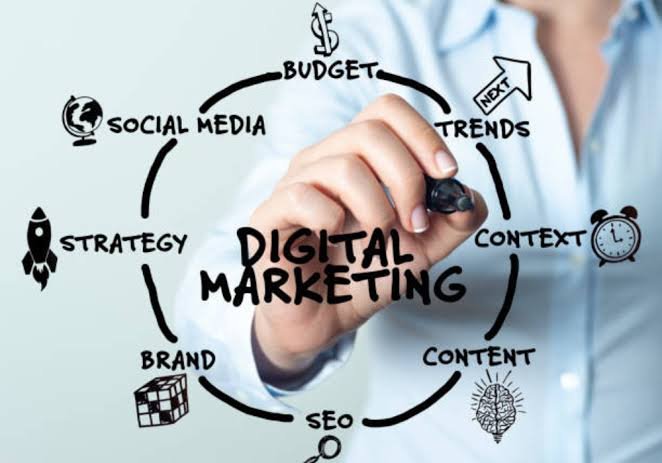
Digital marketing has transformed the way businesses connect with customers. Whether you run a small local business, a startup, or an established company, having a strong online presence is no longer optional. Customers search online before making purchasing decisions, compare brands, read reviews, and engage with businesses through social media. This is where digital marketing plays a crucial role. Digital marketing refers to the use of online channels, digital platforms, and technology to promote products, services, and brands. Unlike traditional marketing, which relies heavily on newspapers, television, radio, and physical advertising, digital marketing allows businesses to reach the right audience at the right time through channels such as search engines, social media, email, websites, and online advertising. What Is Digital Marketing? Digital marketing is a broad field that includes various strategies designed to attract, engage, and convert potential customers online. Its primary goal is not simply to increase website traffic but to build meaningful relationships with customers and generate measurable business results. For example, when someone searches Google for “best digital marketing agency near me,” the businesses appearing in search results have an opportunity to attract that person. Similarly, a customer might discover a brand through an Instagram post, watch a YouTube video, click on a Facebook advertisement, or receive a promotional email. All these activities are part of digital marketing. Why Is Digital Marketing Important? One of the biggest advantages of digital marketing is its ability to connect businesses with highly targeted audiences. Traditional advertising often reaches a broad audience, but digital platforms allow marketers to target people based on interests, location, age, online behavior, search intent, and other factors. Digital marketing is also highly measurable. Businesses can track website visitors, clicks, engagement, leads, conversions, and advertising performance. This data helps marketers understand what is working and where improvements are needed. Another major advantage is cost-effectiveness. A small business can start with a limited budget and gradually increase its marketing investment as it sees positive results. Most importantly, digital marketing allows businesses to compete in a crowded marketplace by building visibility, credibility, and strong relationships with their audience. Major Types of Digital Marketing Digital marketing consists of several important components. Each strategy serves a different purpose, but they work best when combined into a complete marketing system. 1. Search Engine Optimization (SEO) SEO is one of the most important parts of digital marketing. It involves optimizing a website and its content so that it can appear higher in search engine results. For example, if a person searches for “social media marketing services,” a company offering those services wants its website to appear among the top results. SEO generally includes keyword research, high-quality content creation, on-page optimization, technical SEO, internal linking, and earning authoritative backlinks. Unlike paid advertising, SEO can generate consistent organic traffic over time, making it a valuable long-term strategy. 2. Social Media Marketing Social media platforms have become powerful tools for brand awareness and customer engagement. Businesses can use platforms such as Instagram, Facebook, LinkedIn, YouTube, and other networks to communicate directly with their audience. Effective social media marketing is not simply about posting promotional content. Successful brands share useful information, educational content, entertaining posts, customer stories, behind-the-scenes content, and valuable insights. The objective is to build a community around the brand while encouraging customers to take meaningful actions. 3. Content Marketing Content is at the heart of modern digital marketing. Content marketing involves creating and distributing valuable information to attract and retain a specific audience. Blog articles, videos, infographics, guides, case studies, podcasts, social media posts, and newsletters are common examples. Good content should answer questions, solve problems, educate customers, or help them make better decisions. Instead of constantly telling customers to buy, content marketing focuses on providing value first. When businesses consistently publish useful content, they can establish themselves as trustworthy authorities in their industry. 4. Pay-Per-Click Advertising Pay-per-click, or PPC, advertising allows businesses to display paid advertisements on search engines and other digital platforms. Advertisers generally pay when someone clicks on their advertisement. PPC can deliver results quickly because businesses do not have to wait months to build organic rankings. With effective targeting and compelling advertisements, companies can reach potential customers who are actively searching for relevant products or services. However, successful PPC campaigns require careful keyword selection, compelling ad copy, optimized landing pages, budget management, and continuous testing. 5. Email Marketing Email marketing remains an effective way to maintain relationships with existing and potential customers. Businesses can use email campaigns to share newsletters, special offers, product updates, educational content, and personalized recommendations. The key to successful email marketing is relevance. Customers are more likely to engage with emails that provide genuine value rather than messages that constantly push sales. 6. Influencer and Video Marketing Video has become one of the most engaging forms of online content. Businesses can use short-form videos, educational videos, product demonstrations, testimonials, and live streams to communicate their message. Influencer marketing can also help brands reach established communities. By collaborating with relevant creators, businesses can introduce their products or services to audiences that already trust the influencer. How to Create an Effective Digital Marketing Strategy A successful digital marketing campaign starts with a clear strategy. The first step is understanding the target audience. Businesses should know who their ideal customers are, what problems they face, what they want, and where they spend time online. Next, businesses should establish clear objectives. These might include increasing website traffic, generating leads, improving brand awareness, increasing online sales, or retaining existing customers. After defining goals, marketers can select appropriate channels. A B2B company may benefit heavily from SEO and LinkedIn, while a fashion brand might focus more on Instagram, video content, influencers, and paid social advertising. The next step is creating valuable content and distributing it through the selected channels. Performance should then be measured using relevant metrics such as traffic, engagement, leads, conversion rate, customer acquisition cost, and return on investment. Digital marketing is not a one-time activity. It requires continuous

Scroll to Top